
School of Lunch
I was initially brought in to develop an Instagram launch strategy for School of Lunch. But before building a public-facing marketing plan, it became clear that the brand needed stronger foundations: clearer positioning, defined audiences and offers, more intentional customer pathways, and better systems to support growth.
What began as a focused social media project evolved into an ongoing fractional role spanning brand strategy, marketing, business development, and operations, helping translate School of Lunch’s mission into a clearer and more actionable ecosystem.
-
Conducted a comprehensive review of the existing brand, digital presence, offers, audiences, competitive landscape, and market opportunity. The audit identified where greater clarity was needed across positioning, messaging, customer pathways, and the relationship between School of Lunch and its founder.
-
Clarified the business around three core pillars—Training, Consultancy, and Foundation—and developed the strategic foundation supporting each. This included market and customer research, audience personas, positioning, offer architecture, and customer journey mapping to create clearer pathways from initial interest to participation, consulting, partnership, or support.
-
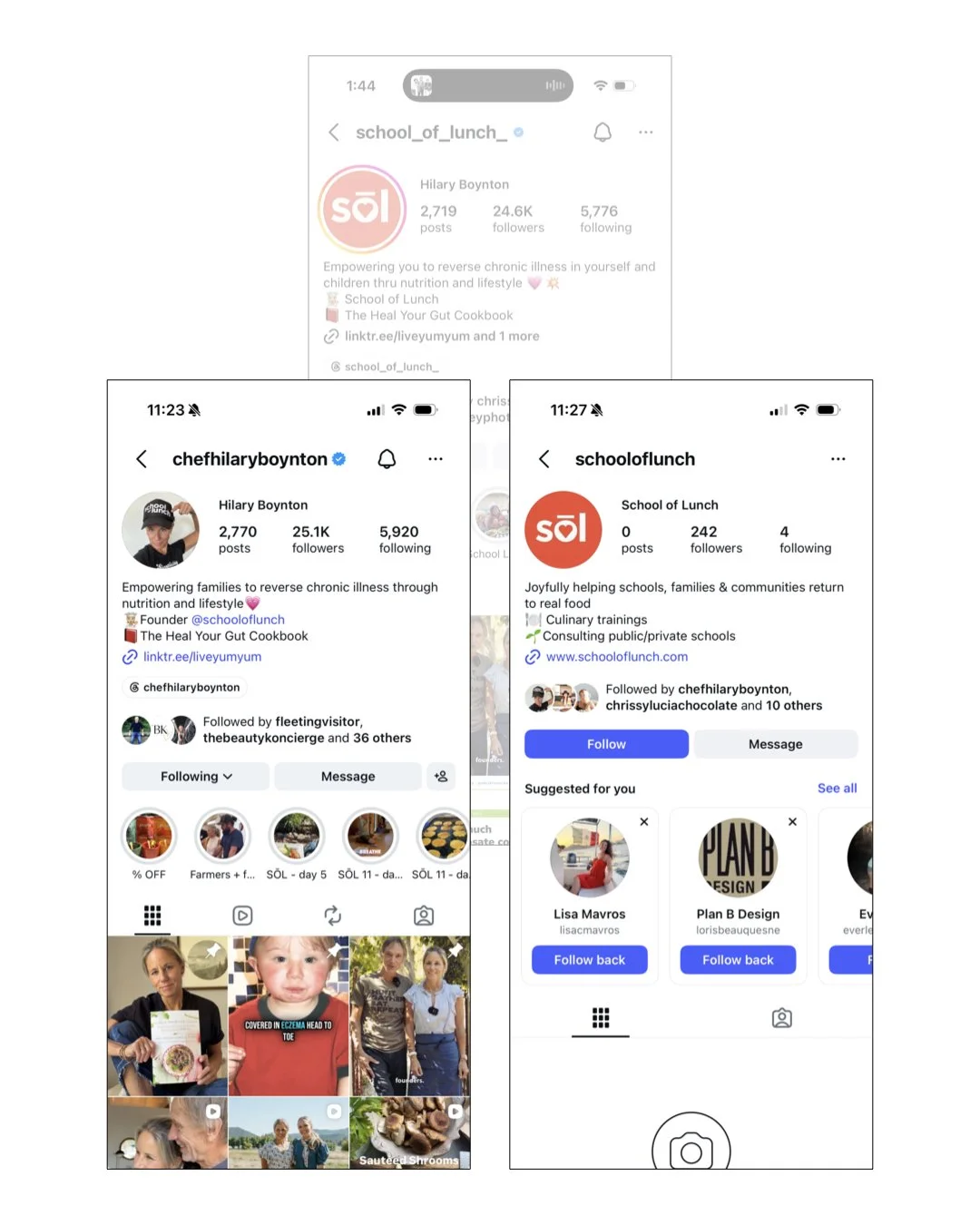
Problem: The brand had been fused with its founder.
Goal: To incrementally separate the School of Lunch brand from its founder.
Projects included:
Building a founder-friendly CRM and task-tracking system inside Google Workspace
Separating @chefhilaryboynton from @schooloflunch on Instagram
Launching founder Substack, The Last Kitchen
Managing a September Back-to-School campaign highlighting in collaboration with other creators
-
The problem: Lack of clear communication channels and CTAs.
The solution: Building up the marketing and communications ecosystem:
Relaunched the weekly newsletter
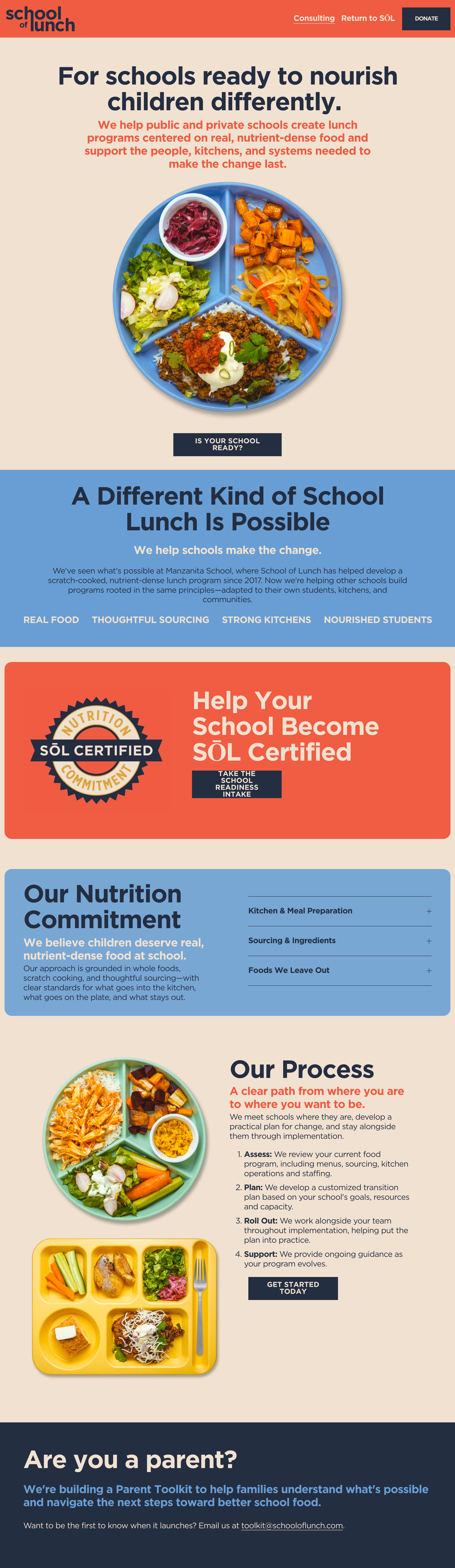
Built the Consulting page with Readiness Intake to capture leads
-
The problem: Fragmented and disconnected systems
The solution: Building systems to make it easier for the team to execute.
This included:
Creating CRMs to organize relationships and opportunities, establishing clearer workflows
Onboarding the founder to Asana to centralize projects, responsibilities, and follow-through.
VISIT THE WEBSITE