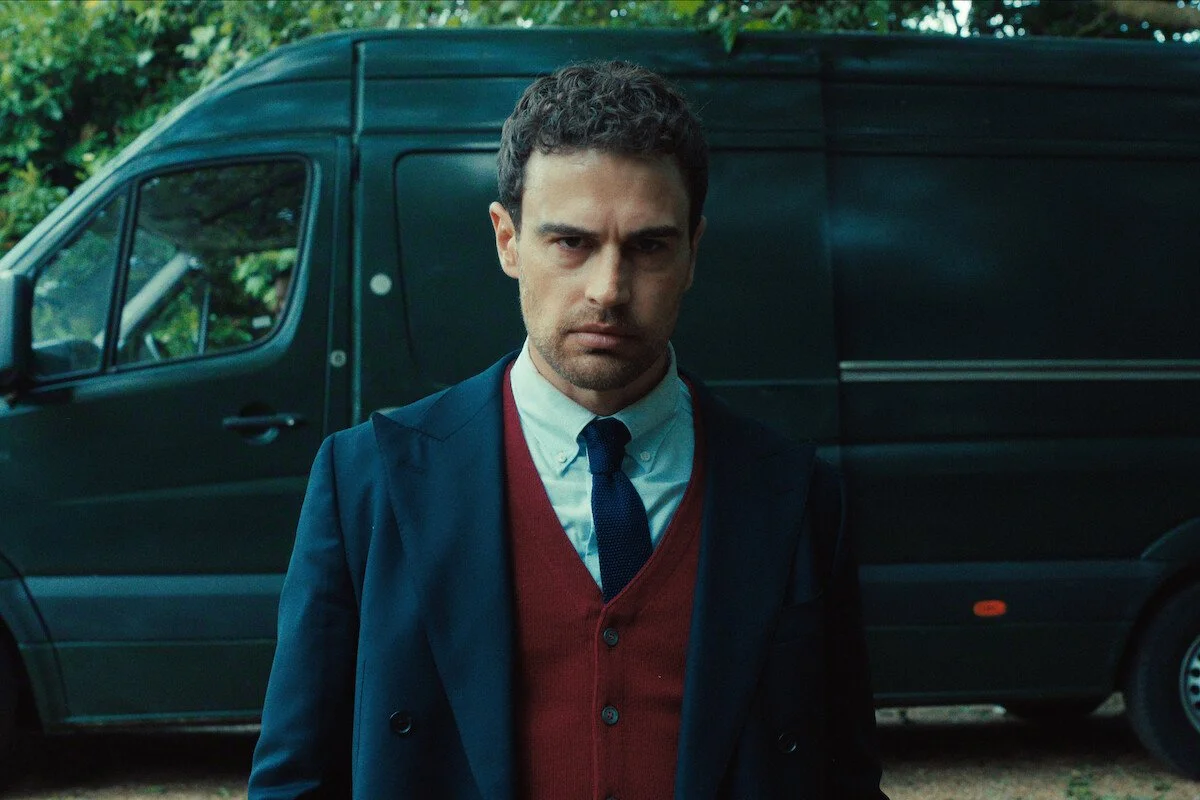
Why are we so fascinated by stories of the fall? Guy Ritchie’s series The Gentlemen is its latest incarnation. A decent man crosses the line and becomes bad. When we meet Eddie Horniman (Theo James), he is a British U.N. army officer who is summoned to return home to his father — a dying aristocrat. In the wake of his passing, Eddie unexpectedly inherits both the dukedom and the estate, discovering that it is being sustained by an enormous underground illegal cannabis operation.

A generation of television culture ago, Vince Gilligan looked at why an ordinary law-abiding citizen could make the decision to become a criminal and conceived Breaking Bad. The show is a study in transformation: how a high-school chemistry teacher turns into a meth manufacturer and drug kingpin. “I originally pitched it to the studio with one line… ‘This is a story about a man who transforms himself from Mr Chips into Scarface’” was Gilligan’s famous original formulation. Breaking Bad took what The Sopranos had discovered about television ten years prior: the possibility of extreme intimacy over years, watching transformation happen molecule by molecule
Theo James described Eddie as becoming addicted to a more primal form of power: “He used to think that he understood power being in the army… Now he understands that power lies in blood, and he gets addicted to it.” Susie Glass (Kaya Scodelario) warns us in the first season: “There’s a dog in a man that the man can’t control. We discipline the dog, not the man.” The metaphor of the estate is almost too perfect — gentleman on the surface, dog underneath.

In ancient Greek myths, Chiron is the wise centaur who mentors Achilles. He is a hybrid: half man, half horse. What distinguishes him from the other centaurs is that they know no limits. Slave to their beastly nature, they are ruled by appetite, rage, and pride. They just can’t stop. Chiron offers a paradox. “He was a kind and generous monster,” says Hellenist Jean Judet de la Combe. “Wisdom, after all, requires that we carry within ourselves something bestial, some monstrous part of ourselves that we know how to master, tame, and whose animal strength we know how to harness. Otherwise, wisdom is merely empty, abstract, and dull.” A sort of “reconciliation of the feral with the refined” as Stanley Johnston, played by Breaking Bad’s very own Giancarlo Esposito, would say.
Achilles possessed immense animal force, speed, rage, an appetite for glory, and the ability to kill almost without limit. But could Achilles govern the beast within? For much of The Iliad, the answer is no. His mênis took control, wrath turned homicidal fury, culminating with the desecration of Hector, piercing his ankles, tying his corpse behind his chariot, and dragging it through the dust back to camp, repeatedly circling Patroclus’ tomb. “There’s a dog in a man that the man can’t control…”

The more interesting question is never why they begin — it’s always family — but why they can’t stop. Chiron may be an antidotal image to what they are missing: a profound sense of self-mastery. Maybe, the virtuous man is not necessarily harmless, on the contrary, he may possess enormous appetite, brutality, and capacity for violence. But virtue and wisdom have endowed him with the capacity to control and not be controlled by his feral nature. That is Chiron — a man who possesses power without being possessed by it.
“People either survive in the jungle or exist in the zoo. Few recognize the significance of the paradoxical reconciliation of the two.” Stanley Johnston agrees: the truly exceptional man isn’t one or the other. He is both. The difference between a man and a beast may have little to do with good versus evil, and everything to do with mastery over possession.
And that is where The Gentlemen leaves us. Writer Matthew Read framed the new season around the question of whether Eddie’s ambition will ultimately cost him his soul. We don’t know yet... Perhaps that is why stories of the fall remain so compelling: the line between man and beast is thin. Eddie is still somewhere between the two. The question is whether he can master the beast before it masters him.