
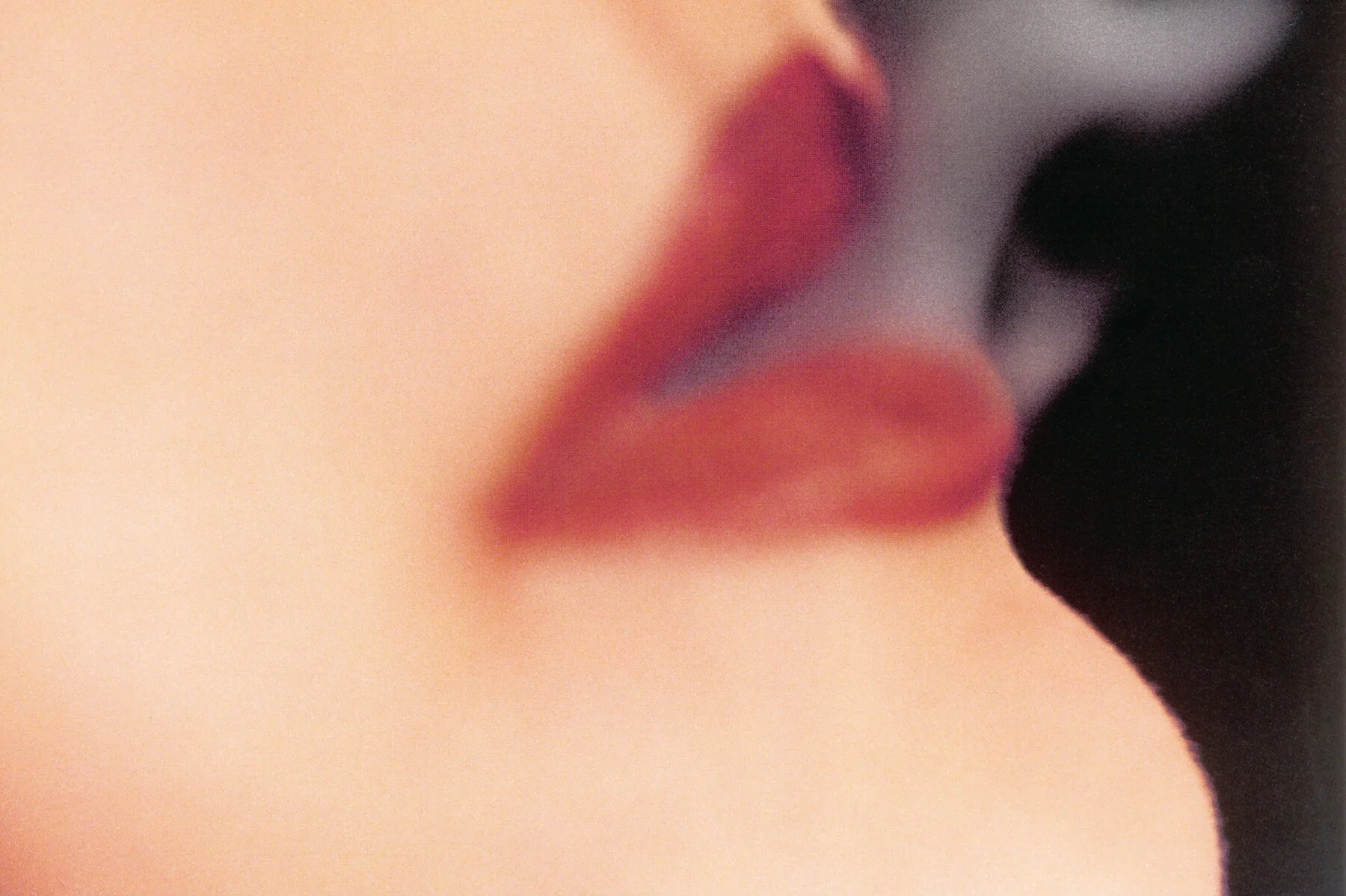
David Lynch, Untitled (Nudes and Smoke), c. 1994 © The David Lynch Estate
It’s 7pm on a Saturday night when I arrive at Pace Gallery. There is a huge line outside that feels like half of Los Angeles had the same idea. But despite looking monstrously long, I find myself inside in less than ten minutes. I step into the jam-packed courtyard of the 15,000-square-foot indoor/outdoor gallery space. David Lynch: LA is the first presentation of the artist’s work in Los Angeles since his death on January 16th 2025. It brings together photographs from five series that Lynch created between 1979 and 2008. Five large-scale color photographs from the 1994 series Figures and Smoke form the centerpiece of the exhibition.
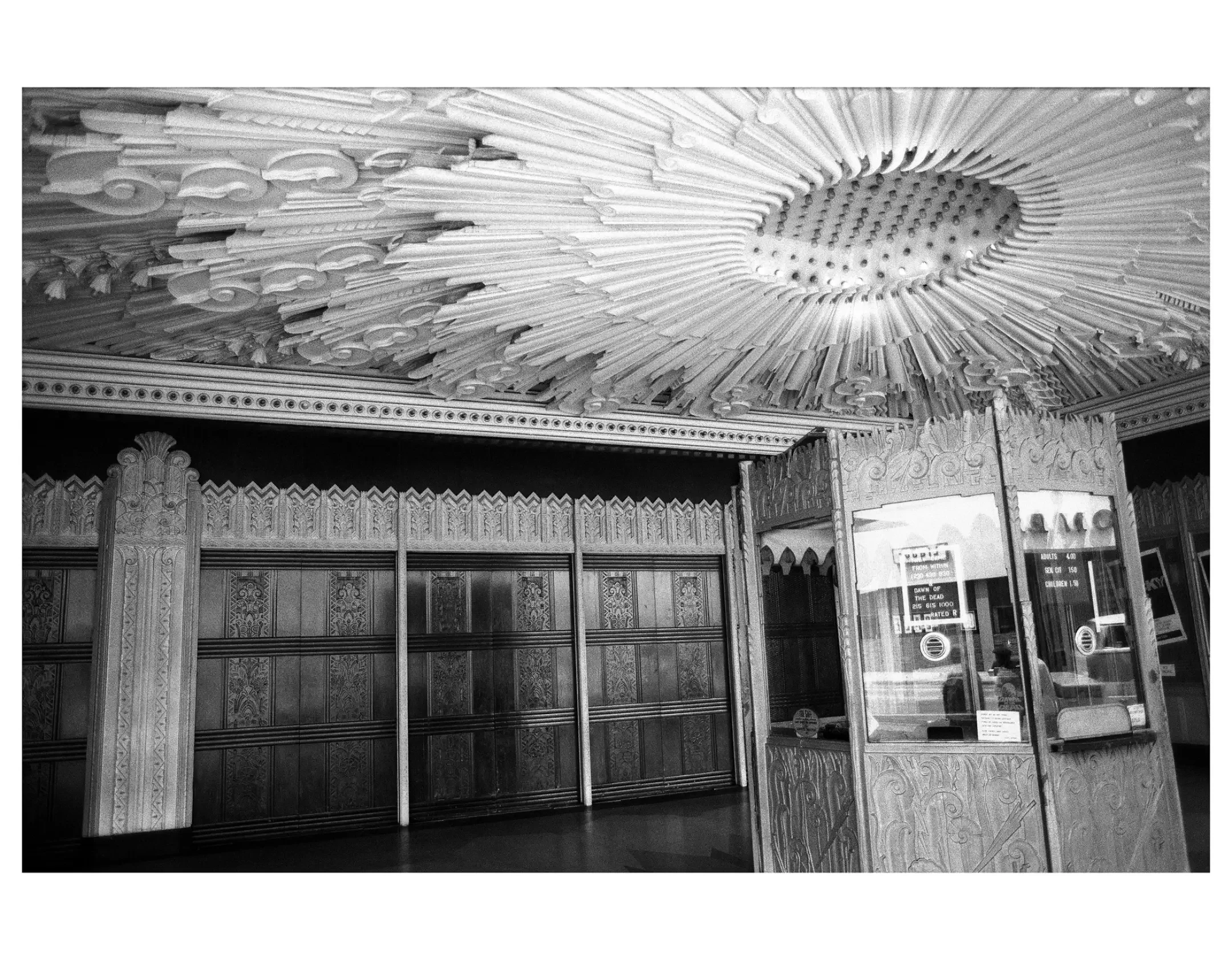
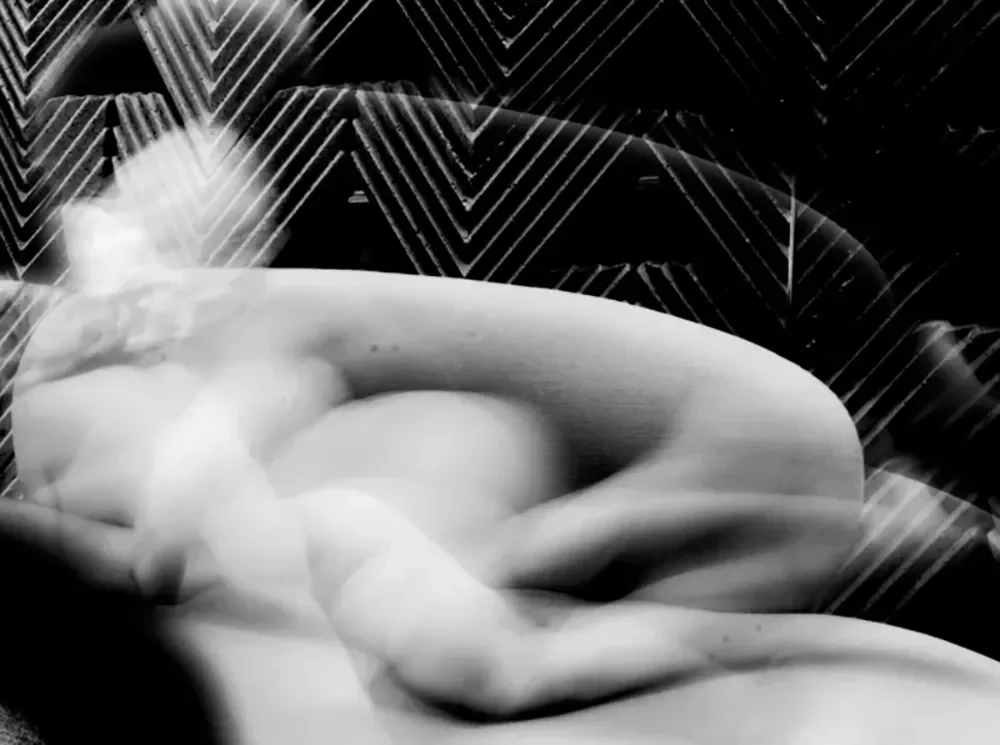
David Lynch, Couch Series, 2008 © The David Lynch Estate
Women are everywhere. His black-and-white nude photographs and his later Couch Series dialogue with images of the streets of Los Angeles. To appreciate the juxtaposition, it’s interesting to realize that Lynch explicitly uses the basic grammar of the odalisque, a long tradition of the reclining female nude that grew out of the much older European tradition of the reclining Venus. The black-and-white prints of Los Angeles streets echo Titian’s idyllic landscape, while multiple exposure and layered negatives develop and blur the Lynchian Venus into a fragmented, distorted, out-of-focus, more abstract shape.
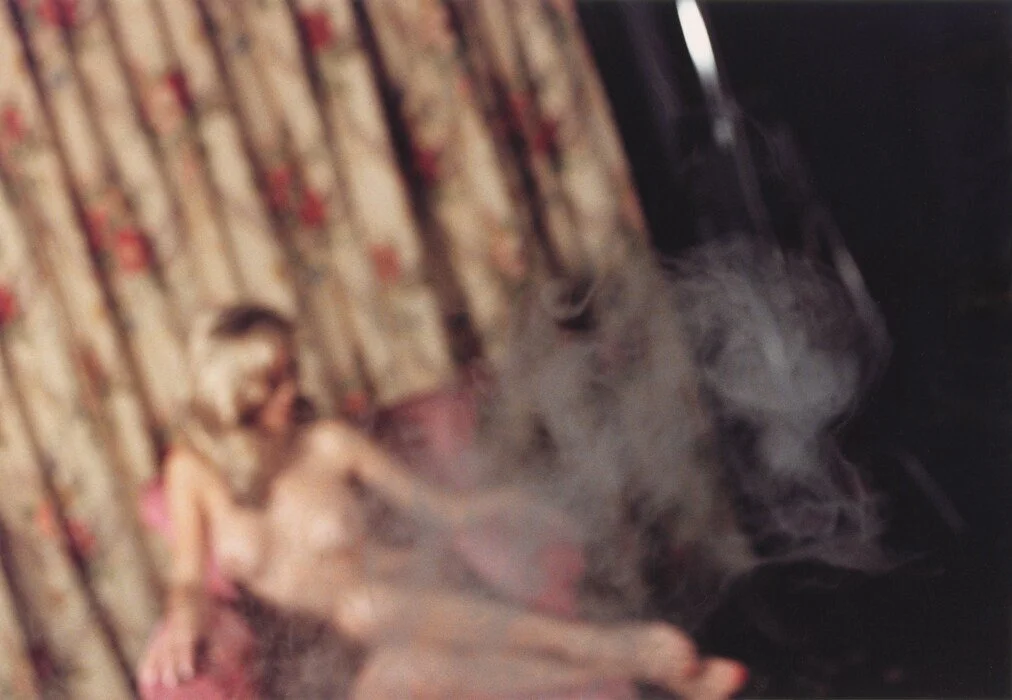
David Lynch, Untitled (Nudes and Smoke), c. 1994 © The David Lynch Estate
The five large-scale pieces from Figures and Smoke are captivating, straight out of a Lynchian dream: erotic, feminine, beautiful, and slightly dangerous. The extreme close-ups on the red lips and smoke create an alluring impression. But step closer, and the erotic mouth becomes an enormous bodily object. And just like that, the intimacy of closeness interrupts the fantasy. What is erotic at one scale becomes too defined, too detailed, and maybe even weird at another. The facial hair, the texture of skin, the little irregularities make the “beautiful woman” stop being an ideal, becoming something much more physical.

David Lynch, Untitled (Nudes and Smoke), c. 1994 © The David Lynch Estate
In the back of the gallery, a small maroon-painted cave-like dark room feels like stepping into Lynch’s bizarre grotto. Fish Kit, Chicken Kit and Duck Kit take apart a fish, a chicken and a duck, disassemble them, and present instructions on how to put them back together. A word that keeps coming up on everyone’s lips is grotesque, which is defined as something “odd or unnatural in shape, appearance, or character; fantastically ugly or absurd; bizarre.” The word itself comes from the Italian grottesca — “of a grotto” — from the discovery of the frescoes of the subterranean grottos of Nero’s Domus Aurea during the Renaissance. These were filled with impossible and unnatural mixtures of human, animal, vegetal and architectural forms — a delicious mise en abyme to say the least.
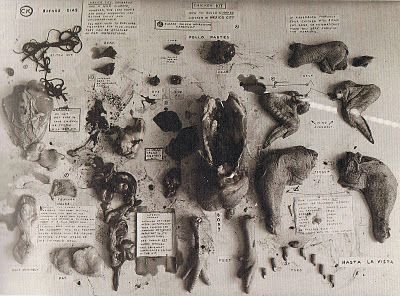
David Lynch, Chicken Kit, 1983 © The David Lynch Estate
Sitting next to the Kits is Bee Board, a photograph of individual pinned bees that are assigned names, suddenly seeming to acquire personalities. This belongs to another Lynch fascination: naming. Lynch’s idea was essentially that the name changes how we perceive an otherwise identical thing and manufactures narrative out of almost nothing. Unlike the bees of Bee Board, the anonymity of the women in the untitled photographs creates an archetypal distance. They become an idea — odalisque, femme fatale, movie star, sex symbol.
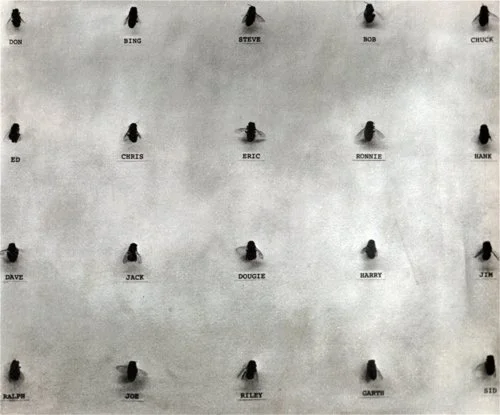
David Lynch, Bee Board, c. 1986–87 © The David Lynch Estate
David Lynch: LA is both sensual and monstrous, a collision of beauty and ugliness, attraction and repulsion, a simultaneous “ew” and “come closer” coming from the same act of looking too closely for too long. I can’t help but remember art curator Jessica Berlanga Taylor’s words about the act of curation as “a method of inquiry about the context that you’re in and […] the relationships that you want to establish between the context, the people, the artist, and the future.” I think David Lynch: LA is a love letter to one of the most singular, fascinating, beautifully weird artists of our century, and to the city that we love to hate and hate to love so much.
